
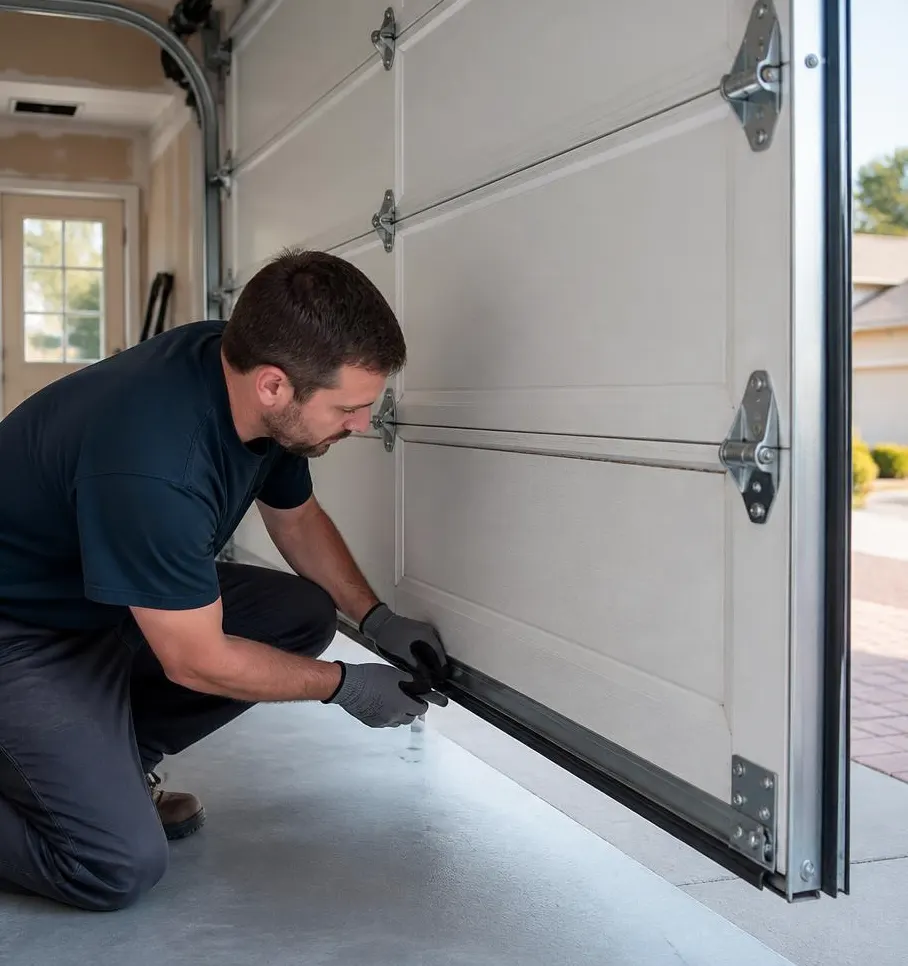
What a technician usually finds on these calls
The call almost always starts the same way: "The opener is dying, it's making this awful noise." A technician pulls into the driveway, watches the door go up once, and within ten seconds knows the opener is fine. What's actually happening is a roller grinding against a bent or rusted track, or a cable that's frayed down to a few strands and about to let go. The opener gets blamed because it's the part people can see and hear working. The rollers and cables are easy to ignore — right up until one of them fails and the door drops, jams, or comes off track entirely.
What these parts actually do
Think of the system like this: the springs do the heavy lifting, the cables are what actually attach the door to that lifting power, and the rollers are what let the door glide smoothly along the tracks instead of dragging or binding. None of them are glamorous. All three are doing serious work every single time the door opens.
- Cables: Thin steel wires under heavy tension, wound around a drum near the spring. They're what's holding the door up when it's not moving.
- Rollers: The small wheels (nylon or steel) that ride inside the vertical and horizontal tracks and let the door panels travel smoothly.
What wear actually looks and sounds like
This is the part that settles the argument, because the symptoms are different depending on which part is failing.
Worn or misaligned rollers
- A rhythmic squeak or grind that happens on every cycle, often worse in one spot on the track
- The door shuddering or vibrating visibly as it travels
- Visible flat spots, cracks, or chunks missing from the roller wheel
- The door looking slightly crooked in the opening
Frayed or failing cables
- Visible broken strands poking out near the bottom bracket or the drum — this is a stop-everything sign
- The door hanging unevenly, with one side lower than the other
- A loud bang or snap followed by the door refusing to move, or dropping suddenly
- Rust or pitting on the cable where it's been sitting damp
Rollers failing is usually a noisy, gradual nuisance. Cables failing is sudden, and it's the one that actually creates a safety problem — a door with a snapped cable can drop fast, and a torsion spring under tension with a compromised cable is not something to troubleshoot yourself.
Why this area is especially hard on both parts
Franklin Square's winters put these components through a lot. Road salt gets tracked in and splashed up onto tracks and hardware, and that salt accelerates rust on cables and steel rollers. The freeze-thaw cycle means moisture gets into small pits and cracks, freezes, expands, and widens them — on both cable strands and roller bearings. Add in the humid summers that follow, and metal parts rarely get a real break from moisture exposure. A lot of the original housing stock here still has its original door hardware, which means rollers and cables that have quietly logged years of cycles through exactly this kind of weather, with no maintenance in between.
What to actually do about it
- Look, don't touch the tension side. Visually check rollers for cracking and cables for frayed strands or rust. Don't try to adjust or remove a cable yourself — it's under spring tension and can snap back hard.
- Listen for where the noise changes. If it's consistent and rhythmic, it's probably rollers. If it's a bang, pop, or sudden refusal to move, treat it as a cable or spring issue.
- Don't keep running the door once you see fraying. A compromised cable can let go mid-cycle, and a door coming down uncontrolled is a real hazard, especially with vehicles or people underneath.
When to call Franklin Square Garage Door Experts
If you're seeing frayed strands, an uneven door, or grinding that's gotten worse over a few weeks, that's the point to stop DIY-ing it. We handle spring replacement and cable replacement together, since they share tension and should be addressed as a system, and we offer garage door maintenance visits that catch roller wear and rust before it turns into a dropped door in the middle of a cold snap.
If your garage door in Franklin Square, NY is squeaking, shuddering, or showing any fraying on the cables, call Franklin Square Garage Door Experts before it becomes an emergency call instead of a scheduled one.