
The Short Answer
The garage door doesn't disappear just because you've turned the space into a home gym, office, or workshop. It either becomes part of your plan — insulated, sealed, or properly decommissioned — or it becomes a cold spot, a security gap, or a safety hazard. There's no version where you just ignore it and everything's fine.
If you're arguing about whether the door needs attention during a conversion, the answer is yes. The real argument should be about which of the three options below makes sense for your situation.
Option 1: Keep It Fully Functional
Some homeowners want to keep the garage door operable even after converting the space, usually because they still want the option to park a car there someday or they use the opening for moving large equipment in and out. If that's the plan, the door needs to actually do its job as an exterior wall, which most original doors from older homes were never built to do well.
- Add or upgrade insulation. Many original doors in this area are single-layer steel or wood with no insulation at all. Insulation kits can help, but a door with polyurethane foam between two steel layers performs far better and resists warping.
- Check the weatherstripping. Bottom seals and side seals dry out and crack with age, especially after repeated freeze-thaw cycles. Gaps here let in cold air, humidity, and the occasional mouse.
- Address rust and corrosion. Road salt tracked in on tires and splashed up during winter storms eats at the bottom panel and the track hardware. A door that's rusting at the base isn't going to insulate well no matter what you add to it.
Option 2: Seal the Door in Place
If you're not planning to ever park a car in there again, some homeowners choose to leave the door physically in place but seal it so it no longer opens — essentially treating it as a permanent wall while keeping the exterior look of the house unchanged. This matters for curb appeal, since replacing a garage door with a solid wall can look mismatched on an older home with original proportions.
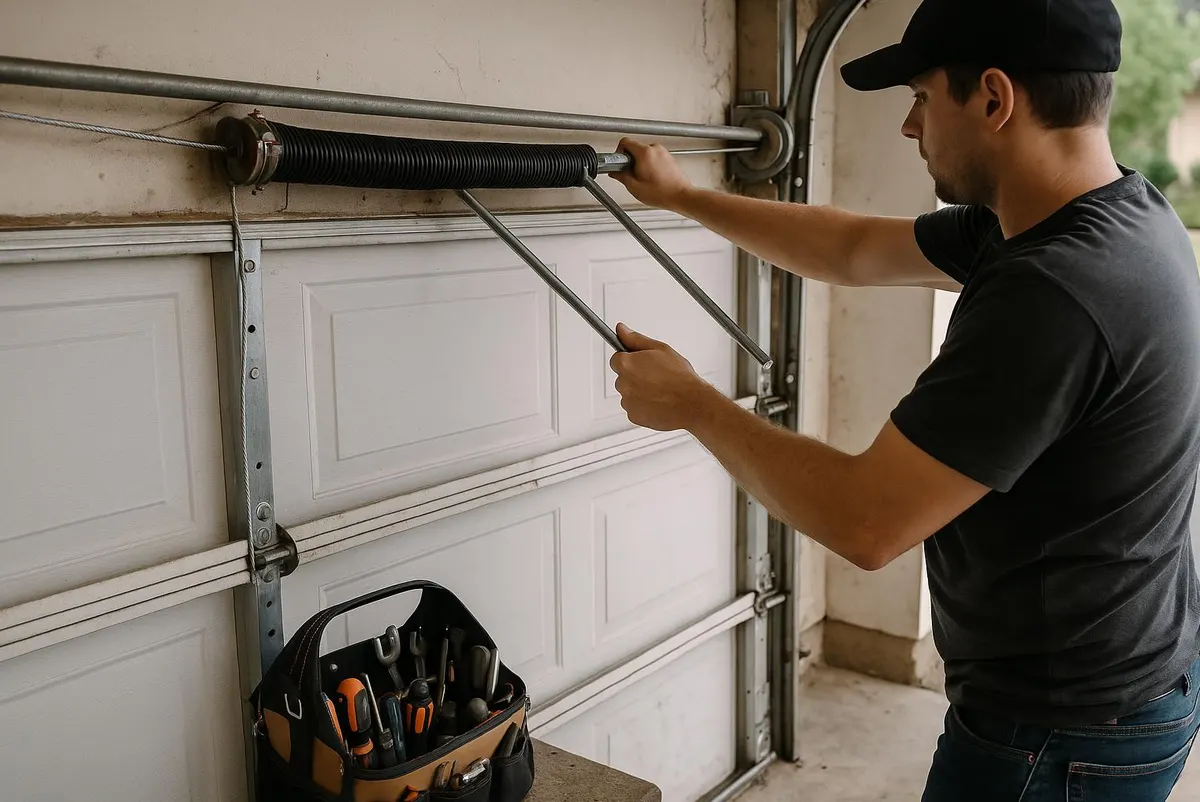
This option requires disconnecting the opener and taking the torsion springs out of the equation. This is the step people skip, and it's the one that causes real problems. A garage door spring under tension doesn't know the room has been turned into a gym — if the opener gets triggered accidentally, or a remote gets bumped in a drawer, the door can still try to lift and crash into drywall, framing, or exercise equipment on the other side. Garage door springs also store a significant amount of force, and disabling that safely isn't a DIY afternoon project.
Option 3: Remove It and Frame a Wall
The most permanent option is removing the door, track, and springs entirely and framing a standard wall with insulation matched to the rest of the house. This gives the best thermal performance and the most usable wall space inside, but it's the most expensive route and it changes the exterior of the house, which some homeowners weigh against resale value — a garage is still a garage in a listing, and a converted one without the door option can affect how buyers see the home later.
Why This Matters More in This Climate
Houses in this part of Nassau County tend to have original doors that were installed decades ago, long before insulation and sealing were standard features. Combine that with humid summers and snowy, icy winters where nor'easters bring driving moisture at the door seams, and an unaddressed garage door in a converted space turns into a condensation and temperature problem fast. Homeowners who finish the room but leave the original door untouched often notice damp walls near the door frame in summer and a noticeably colder zone near the door in winter, even with a space heater running. The door is usually the weak point in an otherwise finished room.
The Security Angle Nobody Thinks About
A converted garage often holds things worth protecting — a home gym with real equipment, a workshop with tools, an office with electronics. If the door still technically operates and the opener is still connected, it's still a point of entry. Make sure whoever finishes the space either secures the opener properly or removes it from the equation entirely, rather than just unplugging it and hoping nobody finds the backup remote in the kitchen drawer.
When to Call Franklin Square Garage Door Experts
Before you insulate, seal, or remove anything, it's worth having a technician look at the door's current condition. We handle garage door maintenance visits that check spring tension, rust, and seal condition before a conversion starts, so you know whether the existing door is worth keeping or better off replaced. If you're going with Option 3, our garage door installation team can remove the old track and springs safely and advise on matching an insulated replacement door to the house if you're keeping the opening functional elsewhere on the property.
If you're in Franklin Square, Elmont, Floral Park, New Hyde Park, Garden City, Hempstead, West Hempstead, or Valley Stream and you're planning a garage conversion, call Franklin Square Garage Door Experts before the drywall goes up. It's a lot easier to deal with the door first.